

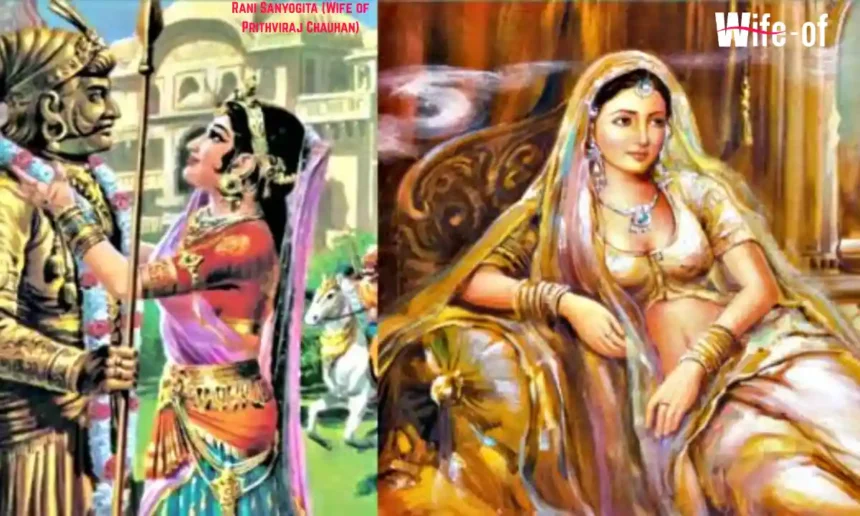
There have been many tales of heroism, sacrifice, and eternal love in the history of India; however, there is one tale that is especially significant from a historical perspective – the tale of Rani Sanyogita (or Samyukta) and Samrat Prithviraj Chauhan. This love story is set during the medieval period in India in the 12th century, when there occurred a turning point in Indian politics.
This princess of Kannauj, who defied her own father for marrying the king of Delhi and Ajmer, still lives in people’s memories as an example of traditional Rajput courage and independence.
Who is Rani Sanyogita?
Rani Sanyogita was the Queen consort of Delhi and Ajmer, married to the legendary Chahamana (Chauhan) ruler Prithviraj Chauhan III. She was the daughter of Raja Jaichand, the powerful Gahadavala king of Kannauj. Sanyogita is immortalized in Indian folklore and classical literature—most notably in Chand Bardai’s epic poem Prithviraj Raso—for her mesmerizing beauty, sharp intellect, and the bold defiance of her father during her historical Swayamvar (a ancient Indian practice where a princess chooses her husband from a group of suitors).
Biography into Table
| Field | Details |
| Name | Rani Sanyogita |
| Full Name | Samyukta / Sanyogita |
| Age | Mid-20s at the time of her passing (12th Century) |
| Date of Birth (DOB) | Exact date unrecorded (12th Century Medieval Era) |
| Birth Place | Kannauj, Uttar Pradesh, India |
| Birth Sign | Unknown due to antiquity |
| Home Town | Kannauj (Gahadavala Kingdom) |
| Current Residence | Historical seats of power: Ajmer and Delhi (Quila Rai Pithora) |
| Nationality | Ancient Indian (Rajput Clan) |
| Family Root | Gahadavala Dynasty of Kannauj |
| Profession | Queen Consort, Administrator, and Royal Advisor |
| Fame | Renowned for her historic Swayamvar, her legendary love story with Prithviraj Chauhan, and her ultimate sacrifice (Jauhar) |
Rani Sanyogita Height, Weight, and Physical Appearance
Because her life unfolded in the 11th and 12th centuries, precise physical measurements like modern weight are unavailable. However, historical texts and court poetry offer vivid descriptions of her royal appearance.
| Parameter | Historical Description |
| Height | Described as exceptionally tall and graceful among her peers |
| Eye Color | Large, expressive dark brown eyes described as lotus-like (Kamal Nayani) |
| Hair Color | Long, thick, jet-black hair traditionally adorned with royal jewels |
| Physical Stature | Highly elegant, possessing a classic royal posture trained in classical dance and horse riding |
| Personal Style | Traditional silk ghagra-cholis, draped in fine North Indian veils (odhni), accessorized with heavy gold, pearl, and uncut diamond Rajput ornaments |
Rani Sanyogita Complete History
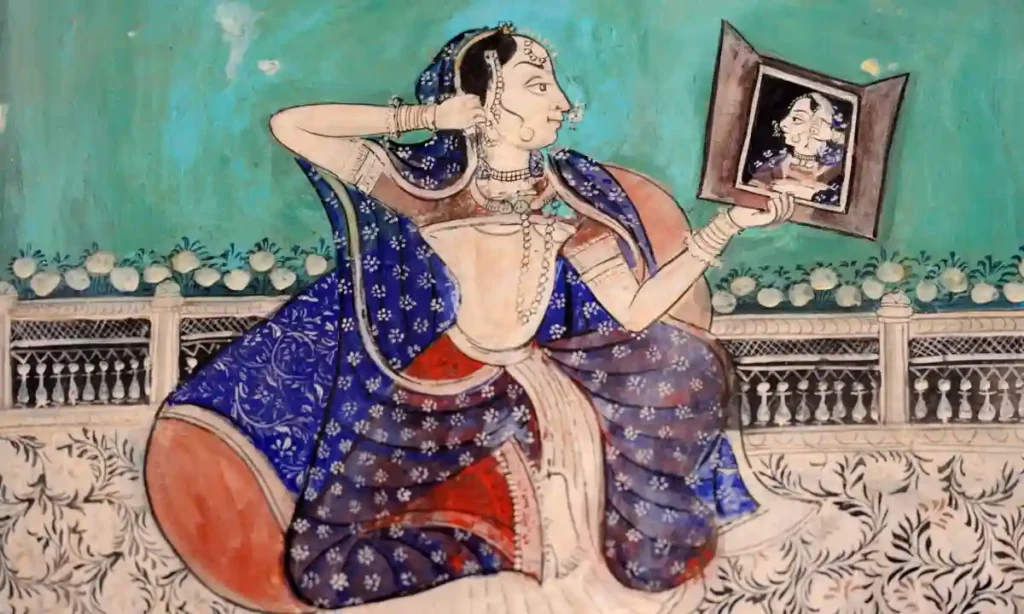
The saga of Rani Sanyogita (also known as Samyukta) and Samrat Prithviraj Chauhan III is one of the most legendary chapters in Indian history. Set during the late 12th century, their story stands at the intersection of a passionate romance and a critical geopolitical turning point that forever altered the course of the Indian subcontinent.
The Backdrop: A Fractured Rajputana
In order to explore Sanyogita’s past, one has to consider the geopolitics of Northern India during the medieval period. Two powerful entities dominated the region:
- Chahamanas (Chauhans), headed by Prithviraj Chauhan, whose headquarters were located at Ajmer and Delhi.
- Gahadavalas, led by Raja Jaichand, with his capital located in the rich and strategically important region of Kannauj.
Raja Jaichand and Prithviraj Chauhan were cousins, but there existed an intense rivalry between them for supremacy in Northern India. Sanyogita was the strong-minded and well-educated princess of Kannauj.
Love from Afar
In accordance with the historical epic poem Prithviraj Raso authored by the royal court bard Chand Bardai, Sanyogita had fallen in love with Prithviraj before even meeting him. Wandering poets and painters traveling across kingdoms used to tell tales about Prithviraj and his unparalleled valor in battle, archery talent, and attractive looks.
Mesmerized with such tales, Sanyogita became determined that she would only be married to none but him. On the other hand, a wandering painter presented a painting of Sanyogita to Prithviraj, who instantly became enamored with her looks and wit, returning her feelings via letters.
The Swayamvar and the Ultimate Defiance
The most significant moment in the life of Sanyogita was when her father, Raja Jaichand, declared himself king by performing Rajasuya Yajna along with Swayamvar for his daughter, deliberately keeping out Prithviraj Chauhan from the list of invited kings and princes.
Further, to taunt Prithviraj even more, Jaichand ordered the making of a clay idol of Prithviraj and installed it at the palace door to serve as a mere doorman (Dwarpal).
When Princess Sanyogita entered the court with the marriage necklace (Varmala), she ignored all the rich princes sitting in the court and went straight towards the palace gate, putting the marriage necklace on the neck of the clay idol of Prithviraj.
Just before anyone in the court could take any action against this act of defiance, Prithviraj Chauhan emerged out of his hiding place outside the court, accompanied by his cavalry and rode away with Sanyogita to Delhi.
Geopolitical Fallout
While the elopement was a triumph of romantic defiance, it carried catastrophic consequences for India:
- The Broken Alliance: Jaichand felt completely humiliated by the public loss of his daughter. The personal enmity between Kannauj and Delhi fractured the Rajput confederacy permanently.
- The Invasion of Tarain: When the Afghan invader Muhammad of Ghor attacked Delhi during the crucial Second Battle of Tarain (1192 CE), Jaichand intentionally withheld his massive army, refusing to send reinforcements to assist Prithviraj. This internal division allowed foreign forces to breach the gates of Delhi, ending Rajput hegemony in the region.
The Final Sacrifice: Jauhar
After the defeat and capture of Samrat Prithviraj Chauhan in the battle of Tarain, enemy forces advanced rapidly towards the city of Delhi.
Not wanting to bow down to the invaders and losing her respect in front of them, Queen Sanyogita took up thousands of royal Rajput ladies for Jauhar (self-immolation). She ended her life by taking part in the fire herself because she wanted to die on her own terms.
Historical Debate: Myth vs. Reality
The exact nature of her involvement is still debated by modern historians:
- The Bardic Tradition: The entire emotional basis of the Prithviraj Raso is her life story as seen in it, and she is depicted as a paragon of ultimate female autonomy.
- The Epigraphic Silence: There are certain contemporaneous Sanskrit works, like the Prithvirajavijaya, that omit her from the narrative, and some historians believe that they embellished her story out of a desire to provide a romantic reason for the fall of Delhi. Yet in later works, like the Ain-i-Akbari written by Abu’l-Fazl for the Mughals, the dramatic elopement of the King of Delhi and the Princess of Kannauj is openly stated.
Rani Sanyogita Related Movies and Shows
1. Samrat Prithviraj (2022)
This high-budget Bollywood epic historical action drama was written and directed by Chandraprakash Dwivedi and produced by Yash Raj Films. It is heavily based on Prithviraj Raso, the Braj language epic poem composed by Chand Bardai.
- Rani Sanyogita Portrayal: Played by Manushi Chhillar (Miss World 2017), marking her Hindi feature film debut.
- Prithviraj Chauhan Portrayal: Played by Akshay Kumar.
- The Plot Focus: The narrative heavily highlights their legendary long-distance love story, Sanyogita’s fierce defiance during her Swayamvar where she garlands Prithviraj’s doorman statue, and her decision to choose Jauhar to protect her dignity.
2. Rani Samyuktha (1962)
A classic vintage biographical film made in the Tamil language that centers entirely around her perspective, political courage, and romance.
- Rani Sanyogita Portrayal: Played by the legendary Indian actress and classical dancer Padmini.
- Prithviraj Chauhan Portrayal: Played by the iconic actor-politician M. G. Ramachandran (MGR).
- The Plot Focus: This musical historical focus traces the intense rivalry between Kannauj and Delhi, painting Samyuktha as a headstrong heroine whose devotion stands firm against her father Jaichand’s imperial arrogance.
3. Dharti Ka Veer Yodha Prithviraj Chauhan (2006–2009 TV Series)
While not a movie, this highly popular television historical series broadcast on Star Plus spent months thoroughly mapping out the detailed life history, childhood, and eventual legendary elopement of the royal couple.
- Rani Sanyogita Portrayal: Played by Mugdha Chaphekar (with a younger version played by Pooja Joshi).
- Prithviraj Chauhan Portrayal: Played by Rajat Tokas.
4. Chakravarti Samrat Prithviraj Chauhan (2026 TV Series)
A modern television adaptation launched on Sony Entertainment Television and SonyLIV that recreates 12th-century medieval history with current visual production standards.
- Rani Sanyogita Portrayal: Played by Urva Savaliya, mapping out the intense Nok-Jhok (playful arguments) and political destiny shared between her and the warrior king.
Early Life and Education Details
Sanyogita spent her early childhood within the heavily fortified, luxurious palaces of Kannauj, which was a thriving center of wealth, arts, and culture in medieval India.
As a high-ranking Rajput princess, her education was comprehensive and rigorous. She was not only tutored in domestic arts and court etiquette but also deeply educated in:
- Political Strategy and Statecraft: Understanding alliances, treaties, and governance.
- Literature and Philosophy: Versed in Sanskrit literature, sacred texts, and poetry.
- Martial Skills: Basic self-defense, horse riding, and tactical palace defense protocols.
Royal Governance according to History
In the context of 12th-century medieval India, the modern concept of a corporate profession did not exist for royalty. According to actual historical records, court documents, and epic texts, Rani Sanyogita’s “profession” was that of a Samragni (Empress / Queen Consort), State Administrator, and Co-Ruler of the Chahamana (Chauhan) Empire.
Career Rise to Fame
It was the unparalleled courage with which Sanyogita dared to fight patriarchal oppression that led to her becoming a legend. The famous escape from Kannauj made her transform herself from a mere princess of her province to an instant romantic, brave, and independent character for all of Rajputana. This story made its way to become the ultimate focal point of Prithviraj Raso.
Award and Nomination
Living in the medieval era long before modern award systems existed, Rani Sanyogita received no formal awards during her lifetime. Instead, her legacy is preserved through:
- Epic Poetry: Immortality in classical Indian literature.
- Cultural Status: She is universally revered as a historical icon of female agency and bravery in Indian textbooks, folklore, and regional plays.
Religion and Ethnicity
Rani Sanyogita practiced Sanatan Dharma (Hinduism). She belonged to the Rajput ethnicity, specifically hailing from the Rathore/Gahadavala clan of Northern India, a community legendary for its strict adherence to honor, chivalry, and defensive warfare.
Marriage Details
The union of the two was sanctified by means of Vedic ceremonies when both arrived safely in Delhi. Although it started off as a passionate affair, it had far-reaching geopolitical implications. The union created a major crack in the united front of the Rajputs against any foreign invasions. Raja Jaichand could not forgive the duo for publicly humiliating him, and India remained vulnerable to attacks from other lands thereafter.
Husband
Samrat Prithviraj Chauhan III, her husband (r. c. 1177–1192 AD), was one of the most celebrated monarchs in the lineage of the Chauhan dynasty. He ruled over large swathes of land from his bases at Ajmer and Delhi and was known for his prowess on the battlefield, his ability to aim blindfolded with sound (Shabdabhedi Baan), and his great victory over the conqueror Muhammad of Ghor at the First Battle of Tarain (1191 AD).
Family: Parents, Kids, Siblings, and Other Relatives
Sanyogita’s Side (Gahadavala Dynasty):
- Father: Raja Jaichand (The last powerful ruler of Kannauj).
- Mother: Queen of Kannauj (Hailing from a prominent regional Rajput house).
- Siblings: Had brothers who perished in subsequent battles against external invaders.
Prithviraj’s Side (Chauhan Dynasty):
- Father-in-Law: Someshvara Chauhan.
- Mother-in-Law: Karpuradevi (a brilliant queen who ruled as regent during Prithviraj’s youth).
- Extended Family: Chand Bardai (The royal court poet and trusted family brother).
Controversies
The chief controversy in the history of Rani Sanyogita is concerned with her existence.
Though she is the heroic heroine of Prithviraj Raso written by the poet Chand Bardai, it should be noted that some historians of the present time state that there is no mention of this heroine by the name “Sanyogita” in the contemporary Sanskrit inscriptions such as the Prithvirajavijaya. Her romance, according to some scholars, was exaggerated by poets in order to introduce an element of romance into the tragic downfall of Delhi. However, for millions of people, she is an indisputable hero of history whose elopement was the main cause for Raja Jaichand to refuse to assist Prithviraj in the battle of Tarain.
Travel and Destinations
- Kannauj: Her birthplace, known for its sprawling gardens, perfumes, and grand architecture.
- Ajmer: The spiritual and cultural heart of the Chauhan dynasty where she spent her early married life.
- Delhi (Quila Rai Pithora): Her primary seat as ruling queen, where she managed the affairs of the empire alongside her husband.
Favorites
Based on medieval court documentations and traditional folklore characterizations, her preferences included:
- Sports: Horseback riding, archery practice, and royal chess (Shatranj).
- Food: Traditional North Indian seasonal sweets, fruits, and royal Rajput lentil dishes.
- Place: The serene lake palaces of Ajmer.
- Song & Culture: Classical Vedic chants and heroic bardic songs tracking ancestry valor.
- Color: Royal saffron (Kesariya), deep crimson red, and pure gold.
- Style Quotient: Finely embroidered silks with pure silver threads (Zardozi).
Net Worth Breakdown & Income Source
In medieval India, individual royalty did not have personal bank balances or corporate net worths. Instead, Rani Sanyogita held joint access to the Imperial Treasury of Delhi and Ajmer, which was valued at billions in modern currency due to massive stores of solid gold, diamonds, emeralds, and land revenue taxes collected from major silk-route trade networks passing through northern India.
Alternative Historical Names and Divine Lore
Though popularly known as Rani Sanyogita in the regional theatrical performances and the modern day textbooks, different names have been mentioned for her in ancient writings. While the Sanskrit writings call her Samyukta, meaning “the united one” or Sanjukta.
In addition to this, the medieval writings in the court of poets raise her stature above that of mortals as she is called the earthly incarnation of Tilottama, who was the celestial and divine Apsara (nymph) from the court of Lord Indra. According to the Prithvirajavijaya, her coming to earth was a predestination for her reunion with Samrat Prithviraj Chauhan, who was the earthly incarnation of Lord Indra.
Co-Wives: Her Position in the Royal Harem
Samrat Prithviraj Chauhan III kept himself strategically married for securing his empire, thereby making Sanyogita one among many in the royal family.
- The Chief Queen (Patrani): The chief queen of Delhi was Rani Icchini, who was a princess from the Parmar family belonging to Mount Abu.
- The Royal Conflict: As per the versions of Prithviraj Raso, Sanyogita’s appearance in the royal palace as the youngest and the most desired wife created a great deal of political conflict within the royal household. Because of her unmatched beauty and intelligence, she was granted half of the royal throne by Prithviraj. This created intense jealousy among the senior queens, especially Queen Icchini, who joined hands with others when the end came near.
Early Academic Upbringing: The School of Madana Brahmani
Unlike the popular opinion that princesses of royal families were educated in the palaces alone, the historical poets have pointed out that Sanyogita was made to study in an elite educational institution called Gurukul. Sanyogita had her advanced studies in Gurukul under the guidance of Madana Brahmani, who was the esteemed scholar of those times. It was in the course of her education in Gurukul when she came across the portraits of Prithviraj Chauhan through their oral epics.
Geopolitical Fallout and the Fracturing of the Rajput Confederacy
The elopement of Rani Sanyogita and Prithviraj Chauhan was not just a dramatic romantic episode; it was a severe geopolitical disaster for medieval India.
- The Permanent Rift: By executing a daring raid on Kannauj and running away with Sanyogita, Prithviraj inflicted a catastrophic blow to the pride of Raja Jaichand, the most powerful king of the Gahadavala dynasty.
- The Vulnerability of India: This bitter personal enmity completely fractured the Rajput Confederacy. Consequently, when the Afghan invader Muhammad of Ghor returned during the Second Battle of Tarain in 1192 CE, Raja Jaichand intentionally withheld his massive army, refusing to provide military reinforcement to Delhi. This internal division effectively cleared the path for the establishment of foreign rule in the Indian subcontinent.
Demystifying Historical Myths and Debunking Colonial Distortions
There have been many fake accounts and rumors pertaining to the last days of Sanyogita which have been spread on the internet over time.
Certain British historians of the colonial era, including Lane Poole, tried to sensationalize the fall of Delhi by writing highly fictitious versions of the story, according to which Sanyogita was either captured alive or forced into an outside marriage after the war. These false claims have been completely debunked by modern Indian historians and medieval studies institutes.
The Rajput code of ethics for war and administration proves that women in Delhi adhered to a high sense of honor and the very moment they were informed of the capture of Prithviraj on the battlegrounds, they performed the Jauhar ceremony.
Conclusion
The story of Rani Sanyogita closes with a heartbreaking but courageous final act. Following Prithviraj Chauhan’s defeat in the tragic Second Battle of Tarain in 1192 CE due to the betrayal of neighboring kingdoms, the enemy forces marched toward the gates of Delhi.
Refusing to surrender her dignity to the invading forces, Rani Sanyogita, along with thousands of brave Rajput women, committed Jauhar (the ancient Rajput practice of self-immolation to protect honor). Though her physical life was cut short, her memory remains completely untouched by time. She stands immortalized in the heart of Indian history as a queen who chose her own destiny, lived with supreme dignity, and met her end with unmatched courage.
Frequently Asked Questions
Did Rani Sanyogita commit Jauhar or Sati?
Rani Sanyogita committed Jauhar (the mass ritual of self-immolation practiced by royal Rajput women to protect their honor from invading forces) at the historical fort complex in Ajmer/Delhi. This occurred immediately after official news reached the palace confirming that Samrat Prithviraj Chauhan had been captured during the catastrophic Second Battle of Tarain in 1192 CE.
Is Rani Sanyogita a real historical figure?
Yes, Rani Sanyogita is a historical figure, though her life is heavily romanticized. Her story is famously detailed in Chand Bardai’s epic poem Prithviraj Raso. While alternative historical sources like the Prithviraja Vijaya refer to her symbolically as the incarnation of the celestial nymph Tilottama on the banks of the Ganges, contemporary Hindu, Jain, and early Mughal records (such as Abul Fazl’s Ain-e-Akbari) universally corroborate her legendary elopement.
Who was the father of Rani Sanyogita?
Her father was Raja Jaichand (Jayachandra), the powerful king of the Gahadavala dynasty who ruled over the wealthy empire of Kannauj. His bitter political rivalry with Prithviraj Chauhan intensified drastically after Sanyogita’s public elopement.
Who was the chief queen of Prithviraj Chauhan?
The chief queen (Patrani) of Prithviraj Chauhan was Rani Icchini, a Parmar princess from Mount Abu. Rani Sanyogita was his last and most passionately pursued wife, and her arrival initially created significant domestic and political tension within the royal harem.
Also read: Nayanika Reddy (Wife of Allu Sirish): Age, Bio, Family, Career, and Net Worth in 2026