

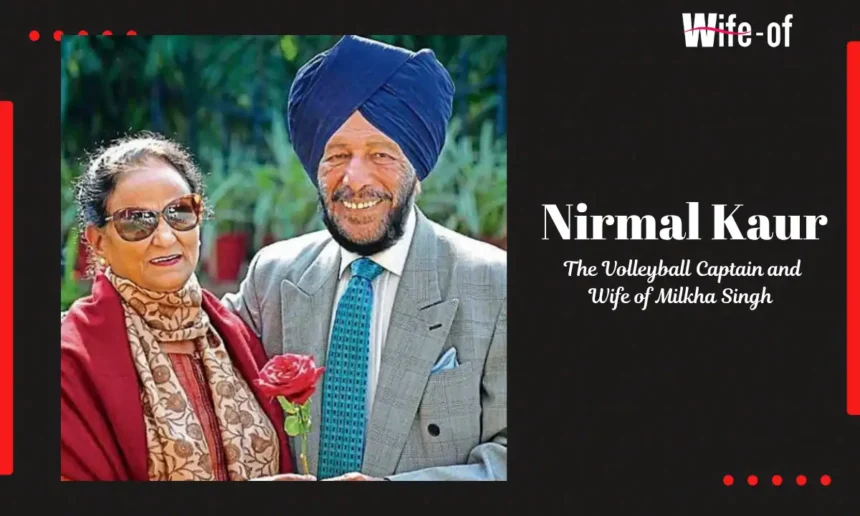
Nirmal Kaur, the indomitable wife of legendary sprinter Milkha Singh, was more than just a sports legend’s spouse. She made her own mark in Indian sports history through her work as a volleyball captain and her position as a sports administrator. Nirmal Kaur who was born in 1938 experienced social expectations of her era which dictated how women should act. She reached the pinnacle of her sport by leading both Punjab and Indian women’s volleyball teams while earning her Political Science master’s degree from Punjab University. Her path from athlete to Director of Sports for Women in Punjab shows how she contributed multiple times to Indian sports development.
Who is Nirmal Kaur?
Nirmal Kaur stands as one of India’s pioneering female sports leaders, renowned for her leadership as captain of the Indian women’s volleyball team during the 1950s and 1960s. Nirmal competed in sports because she wanted to achieve success which many women during her time could not do. Her story creates a connection with Milkha Singh which forms one of India’s most famous athletic couples. Nirmal used her volleyball achievements to create institutional support for female athletes as she worked as the Director of Sports for Women at the Punjab government.
Nirmal Kaur Biography
| Field | Detail |
|---|---|
| Real/Full Name | Nirmal Saini Kaur |
| Known For | Wife of Milkha Singh, Indian women’s volleyball captain |
| Age (at Passing) | 82 years (Born October 10, 1938; Died June 13, 2021) |
| Birth Date | 10 October 1938 |
| Birthplace | Sheikhpura, Punjab (now Pakistan) |
| Birth Sign | Libra (born October 10) |
| Hometown | Chandigarh, Punjab, India |
| Current Residence | Home was in Chandigarh (Sector 8-B) |
| Nationality | Indian |
| Family Root | Punjabi Khatri family from Pathankot |
| Profession | Volleyball player, sports administrator, Director of Sports for Women |
| Fame | Sports legend, mother of golfer Jeev Milkha Singh |
| Other Notable Role | Director of Sports for Women, Punjab Government |
Nirmal Kaur Age and Early Life
Nirmal Kaur was born on October 10, 1938, in Sheikhpura, Punjab, which became part of Pakistan after Partition. Her family, belonging to the Punjabi Khatri community, relocated to India, eventually settling in the Punjab region. Nirmal, who grew up in India after Partition, experienced the difficulties that come with dislocation and the need to adapt to a new culture but her challenges made her stronger. Her father, Mehar Chand Saini, initially opposed her inter-caste marriage to Milkha Singh, a Sikh of different caste, but later relented after intervention from political leaders. The combination of early-life challenges and family conflicts in her background drove her to pursue athletic success despite the restrictions imposed by society.
Nirmal Kaur Height, Weight, and Physical Appearance (Table)
| Attribute | Measurement/Detail |
|---|---|
| Height | 165 cm (5′ 5″) |
| Weight | 60 kg (132 lbs) |
| Body Type | Athletic, sporty build |
| Eye Color | Dark brown |
| Hair Color | Black (often dyed) |
| Skin Tone | Warm wheatish complexion common in Punjab region |
| Overall Appearance | Slender, energetic, often seen in traditional Punjabi attire |
Nirmal’s athletic build reflected her volleyball training—lean yet strong, with a height that provided her an advantage on the court. Her traditional Punjabi appearance, often wearing salwar kameez even during international tournaments, symbolized her cultural pride despite competing globally.
Nirmal Kaur Education and Childhood
Nirmal Kaur’s academic path matched her achievements in sports. She earned a Master’s degree in Political Science from Punjab University in 1958, demonstrating that she balanced intellectual pursuits with athletic commitments. The Partition forced her family to move, which disrupted her early education, but it ultimately helped her develop the ability to adapt to different situations. Nirmal’s passion for sports developed through her upbringing in a traditional Punjabi household because society then restricted women’s access to sports activities.
Key Educational Milestones
- Primary Education: Attended local schools in Punjab during childhood relocation
- University Education: Punjab University (completed in 1958)
- Degree: Master of Arts in Political Science
- Achievement: Balanced national-level volleyball commitments with academic studies
Nirmal Kaur Profession
Nirmal Kaur started her career as an athlete before she became an administrative professional. As a volleyball player, she competed at national and international levels, captaining teams to championship victories. After ending her playing career, she dedicated herself to sports administration by taking the position of Director of Sports for Women at the Punjab government. She created programs to increase women’s sports participation and handled tournament organization while working in this position. Her work combined her athletic background with her knowledge of government systems to establish new opportunities for female athletes in Punjab.
Professional Roles
- National Volleyball Player (1950s-1962)
- Represented Punjab and India
- Captained multiple teams to national titles
- International Volleyball Captain (1959-1962)
- Led Indian tours to Ceylon (Sri Lanka)
- Maintained undefeated records in tournaments
- Sports Administrator (1970s-2000s)
- Director of Sports for Women, Punjab
- Developed women’s sports infrastructure
- Mentored young athletes
Nirmal Kaur Career Journey
Nirmal Kaur’s career progression demonstrates a smooth path which leads her from being a competitor to becoming a leader. Her journey began in college volleyball when she led Punjab University to victory in the All-India Inter-University Volleyball Championship (1957-1958) which took place in Bombay. Her successful performance established her as an exceptional setter who led her team to victory. She joined the Punjab team in 1956 which achieved an undefeated National Championship win in Patiala to become the first Indian team to accomplish this feat. Her leadership extended internationally when she led Indian teams which toured Ceylon to victory in all of their matches during the 1959 Indo-Ceylon series.
Milestones in Volleyball Career
- 1955: Member of UP volleyball team touring Ceylon
- 1956: National Champion with Punjab team (undefeated)
- 1957-1958: University Championship with Punjab University
- 1959: International Captain—Ceylon tour victory
- 1962: Retired from active play after marriage
Her retirement in 1962 coincided with her marriage to Milkha Singh, but her influence continued through administrative roles. As Director of Sports for Women, she ensured that Punjab became a hub for women’s volleyball, with her former team maintaining dominance until 1963 despite her absence.
TV Show Appearances
While Nirmal Kaur wasn’t a regular television personality, her life story gained prominence through documentaries and news features about Milkha Singh, particularly following the 2013 film Bhaag Milkha Bhaag. Her interviews with sports channels and newspapers highlighted her volleyball career and marriage, providing rare insights into their family life. These appearances portrayed her as a supportive yet strong-willed partner, balancing her own achievements with her role as Milkha’s wife. Her presence in media coverage helped document women’s sports history in India, often overshadowed by male athletes.
Nirmal Kaur Awards and Achievement
| Year | Award / Achievement | Description |
|---|---|---|
| 1956 | Undeated National Champion (Punjab women’s volleyball team) | Led Punjab to the National Volleyball Championship title without losing a single match—India’s first such undefeated national title in women’s volleyball. |
| 1957–1958 | All‑India Inter‑University Volleyball Champion (Punjab University) | Captained Punjab University women’s volleyball team to victory in the All‑India Inter‑University Championship held in Bombay. |
| 1959 | International Captain – Indo‑Ceylon (Sri Lanka) series | Captained the Indian women’s volleyball team on the Ceylon tour and won all matches, remaining undefeated in the series. |
| 1960s | Multiple Punjab State Championships | Continued leading Punjab women’s teams to multiple state‑level titles domestically after her university success. |
| Later career | Director of Sports for Women, Punjab Government | Though not a trophy, this role is widely recognized as a major institutional achievement, where she built programs and infrastructure for women’s sports in Punjab. |
Major Achievements
- Undefeated National Championship (1956): Punjab team’s first such victory
- Domestic Dominance: Three-time Punjab team captain to national titles
- International Success: 1959 Ceylon tour—won all matches
- Administrative Impact: Developed women’s sports programs in Punjab
- Legacy Recognition: Remembered as pioneer for women’s volleyball in India
Nirmal Kaur Volleyball Captain Journey
Nirmal Kaur started her career as a college athlete but developed into a national team captain showing her growth as a leader. The Punjab University volleyball team captaincy which she held led her team to win the All-India Inter-University Championship because she used strategic planning and her ability to motivate players. Her selection as captain of the Punjab state team came naturally, as she consistently elevated team performance. The 1956 National Championship victory in Patiala which her team achieved without losing any matches established her status as India’s leading female volleyball player.
Her captaincy reached its peak during the 1959 Ceylon tour when she led the team to international success. She used her leadership skills to guide the Indian delegation through difficult overseas conditions while keeping the team together and maintaining their tactical discipline which resulted in an undefeated record. His captaincy approach blended traditional Punjabi discipline with precise technical skills, which he required his players to wear traditional clothing during matches to showcase their cultural heritage— a practice which exists in international sports venues.
Nirmal Kaur Religion and Caste
Nirmal Kaur belonged to the Sikh Khatri community, practicing Sikhism while maintaining strong Punjabi cultural traditions. Her family roots trace back to Pathankot, which serves as a home for many Khatri people. The inter-caste marriage consideration with Milkha Singh (from a different Sikh sub-caste) highlighted religious tolerance within their community, as political intervention facilitated their union. Nirmal’s Sikh principles of hard work and discipline and community service work formed the foundation of her sports and administrative activities. Her traditional attire during volleyball matches reflected this cultural- religious blend.
Love Life
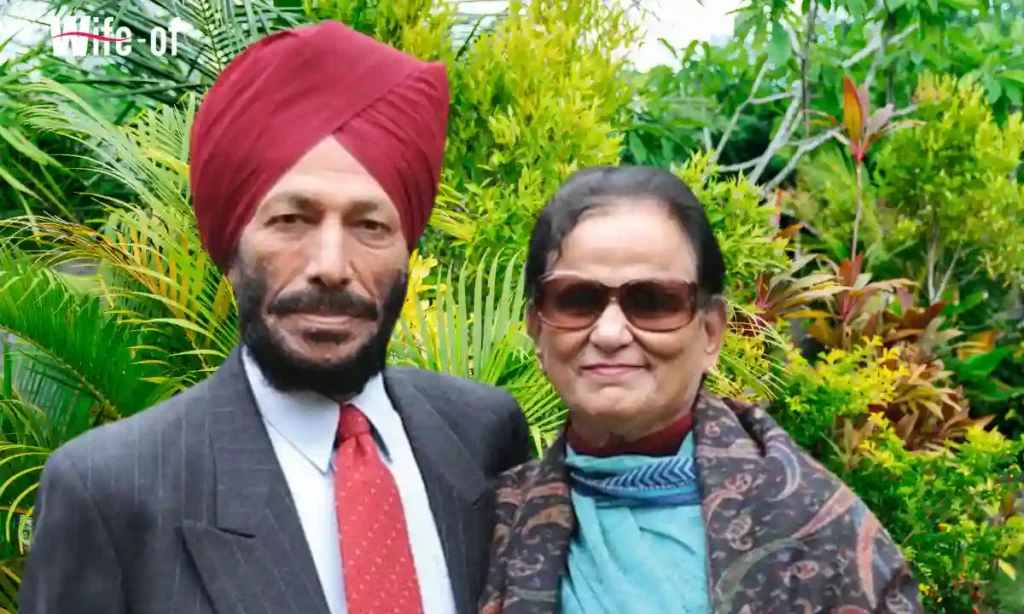
The love story between Nirmal Kaur and Milkha Singh stands as one of India’s most romantic athletic love stories. Their first meeting occurred in Patiala during a sports event, where Milkha, already an emerging star, noticed the tall volleyball captain. Nirmal and Milkha established deeper bonds during the 1955 Indo-Ceylon Championship which took place in Ceylon (Sri Lanka) because Nirmal’s team toured while Milkha competed in athletics. The athletes developed genuine connections through their shared sports environment because they both recognized the demands of their sport and required dedication.
The couple maintained their relationship despite Nirmal’s father opposing their inter-caste marriage because their dedication to each other resulted in political support for their marriage. Former Punjab Chief Minister Partap Singh Kairon acted as mediator who persuaded Mehar Chand Saini to accept their marriage. The love story between the couple showed their mutual respect because Milkha regarded Nirmal as his “biggest trophy” and Nirmal supported him throughout his Olympic career.
Nirmal Kaur Husband: Milkha Singh
Milkha Singh, Nirmal’s husband, was India’s legendary sprinter, nicknamed “The Flying Sikh.” Born on October 20, 1929, he gained fame at the 1956 Melbourne Olympics and 1960 Rome Olympics, narrowly missing medals but establishing India on the global track map. His rivalry with Pakistan’s Abdul Khaliq and his 1960 Olympic 400m final (45.73 seconds) remain iconic. Milkha’s discipline, rigorous training under RAF officer Charlie Walker, and his post-Partition survival story inspired generations.
Nirmal complemented Milkha’s intense personality—his compulsive running vs. her volleyball discipline. Their partnership created a balanced household where both athletic legacies influenced their children. Milkha often credited Nirmal for his post-1960 success, acknowledging her emotional support. Together, they represented India’s sporting golden era, surviving the 19839 military coup in Pakistan and later witnessing their son Jeev’s golf triumphs.
Nirmal Kaur Marriage Details
Nirmal Kaur and Milkha Singh married on May 5, 1963, in Pathankot, Punjab, after overcoming initial family opposition. The wedding featured Sardar Umrao Singh, Punjab’s Sports Minister, as part of the groom’s procession, highlighting the couple’s sporting stature. Their marriage united two distinct Sikh lineages—Milkha’s village background with Nirmal’s educated Khatri family—creating a unique cultural blend.
The ceremony emphasized traditional Punjabi rituals alongside modern elements, reflecting their status as rising sports stars. Milkha’s career demands (international competitions, training camps) required frequent separations, but Nirmal maintained their household in Chandigarh. The couple’s 59-year marriage became a model of endurance, surviving professional pressures and personal tragedies, including Milkha’s post-Olympic depression and later health battles.
Nirmal Kaur Children
Nirmal and Milkha’s family produced India’s first major golf star alongside three accomplished daughters:
- Jeev Milkha Singh (born December 15, 1971)
- Indian professional golfer
- First Indian to win European Tour titles
- Represented India in multiple Olympics
- Sonia Sanwalka (eldest daughter)
- Successful businesswoman
- Balanced family responsibilities with professional commitments
- Grandchildren (through Sonia and Jeev)
- Carried the sporting legacy forward
Family: Parents, Siblings and Relatives
| Family Member | Detail |
|---|---|
| Father | Mehar Chand Saini – traditional Punjabi Khatri patriarch |
| Mother | Name not widely documented; raised Nirmal with strong family values |
| Siblings | Multiple siblings; exact number and names not publicly recorded |
| Hometown / Roots | Pathankot, Punjab, India (family originally from this region) |
| Spouse | Milkha Singh – legendary Indian sprinter |
| Son | Jeev Milkha Singh – professional golfer and international sports star |
| Daughters | Sonia Sanwalka and other daughters (exact number not clearly documented) |
| Grandchildren | Children of Jeev Milkha Singh and daughters (carry forward the sporting–family legacy) |
| Extended Relatives | Milkha Singh’s family from Ghurka village, Punjab; combined Punjabi rural–urban family setup |
Controversies
Unlike her husband’s high-profile Olympic controversies, Nirmal Kaur’s controversies were minimal and largely undocumented. Her 1962 marriage faced social scrutiny due to inter-caste considerations, but political intervention resolved this. Later, her administrative decisions as Director of Sports for Women may have generated internal bureaucratic debates, though these aren’t publicly recorded. The primary controversy surrounding her legacy stems from media oversimplification—often portraying her merely as “Milkha Singh’s wife” rather than recognizing her individual achievements.
Travel and Destinations
Nirmal traveled to various places for work because she wanted to experience different cultures. Her most significant journey was the 1955 Ceylon (Sri Lanka) volleyball tour, where she met Milkha—these international matches exposed her to different cultures while maintaining her traditional Punjabi attire. Her 1959 Ceylon tour brought new experiences because she had to adapt to different weather conditions and fighting techniques.
Chandigarh’s planned urban environment provided her with knowledge about contemporary city development. The family’s travels to international tournaments and Jeev’s golf events created global connections, though these were secondary to her domestic focus. Nirmal used travel for his sporting purposes and family duties because he believed that travel should only occur when it served those two goals.
Favorites (Personal Preferences)
Though comprehensive records are limited, Nirmal’s preferences can be inferred from her lifestyle:
- Sports: Volleyball (primary), athletics (through Milkha)
- Food: Traditional Punjabi cuisine—sarso da saag, makki di roti, paneer dishes
- Place: Chandigarh (home), Pathankot (family roots)
- Song/Singer: Punjabi folk music; contemporary Hindi film songs popular in 1950s-60s
- Actor/Actress: Likely appreciated Raj Kapoor and Nargis films popular during her youth
- Player: Volleyball teammates; possibly tennis star Ramanathan Krishnan (contemporary)
- Color: Traditional Punjabi greens and reds
- Style: Traditional salwar kameez even during international matches
These preferences reflected her cultural grounding while embracing modern sporting professionalism.
Net Worth Breakdown
Nirmal Kaur’s financial status derived from multiple sources. As Director of Sports for Women, she earned a government salary with pension benefits. Her husband’s endorsements (post-1960) and later golf success through Jeev contributed to household wealth. Public estimates suggest $2.5 million net worth (2012), though this fluctuated:
Assets
- Property: Family home in Chandigarh (Sector 8-B)
- Investments: Government pension funds, possibly real estate
- Legacy: Family’s sports endorsement income (Jeev’s golf earnings)
Liabilities
- Medical Expenses: COVID-19 treatments 2020-2021
- Living Costs: Chandigarh lifestyle expenses
Income Sources
- Government Salary (Director role)
- Pension (post-retirement)
- Family Endorsements (through Milkha and Jeev)
- Property Appreciation (real estate in Chandigarh)
Social Media
Nirmal Kaur predated social media’s prominence, active during 1950s-1980s. Her digital presence emerged posthumously through:
- Family accounts: Jeev Milkha Singh’s social media tributes
- Sports organizations: Volleyball associations’ memorial posts
- News outlets: Online obituaries and features
Interesting and Hidden Facts About Nirmal Kaur
- She walked onto the volleyball court in a salwar kameez
Even in international matches, Nirmal Kaur preferred to play in traditional Punjabi salwar kameez, proudly representing her culture on the court instead of wearing standard sportswear. - Punjab volleyball stayed champions after she retired
When she quit playing in 1962, the Punjab women’s volleyball team she had led remained India’s top side for another year, showing how strong her leadership foundation was. - She first saw Milkha Singh in Patiala, not in Colombo
Contrary to many dramatized versions, they first met in Patiala at a sports event, and only later reconnected more deeply during the Colombo trip. - Her captaincy journey began in college
Before captaining Punjab or India, she first led Punjab University’s women’s volleyball team to the All‑India Inter‑University Championship title, proving her leadership early. - She grew up in a broken, unstable home
Her childhood was marked by family separation and emotional turbulence, which made her extra disciplined, serious, and focused on sports and studies. - Her father initially refused to bless her marriage
Mehar Chand Saini was strongly against her marrying Milkha Singh due to caste and social differences, and the match only went ahead after Punjab Chief Minister Partap Singh Kairon personally intervened. - She quit volleyball right after marriage
In 1962, just after tying the knot, she voluntarily left the volleyball court at the peak of her career to focus on family, putting her personal sporting glory aside. - Her international matches were undefeated
As captain of Indian sides touring Ceylon (Sri Lanka) in 1959, she led the team to win every single match, building a reputation as a calm but ruthless leader. - She quietly built women’s sports infrastructure in Punjab
As Director of Sports for Women in Punjab, she worked behind the scenes to create training programs, tournaments, and support systems for girls long before women’s sports became mainstream. - She was born on the same side of Punjab as Milkha
Both Nirmal and Milkha were born in villages that now lie in Pakistan, surviving Partition and the trauma that followed, which gave them a deep emotional bond. - She was one of the first respected female captains in Indian sports
In a male‑dominated era, her role as Indian women’s volleyball captain was underrated, even though her decisions on team selection and on‑court tactics were just as important as those in men’s games. - She was the calm opposite of Milkha’s fiery personality
While Milkha was known for his passion, anger, and intensity, Nirmal was described as soft‑spoken, patient, and emotionally steady, often helping him cool down after tough races. - Her disciplined household shaped Jeev Milkha Singh’s golf career
Though not a golfer herself, she created a strict, disciplined home environment where practice, punctuality, and sportsmanship were non‑negotiable, influencing Jeev’s professionalism on the golf course. - History remembers her more as “Milkha’s wife” than as a volleyball pioneer
Today most people call her “Milkha Singh’s wife” or “Jeev Milkha Singh’s mother”, but very few know she was once a national‑level volleyball captain and a quiet architect of women’s sports in Punjab.
Conclusion
Nirmal Kaur became an important figure because she lived beyond her roles as Milkha Singh’s wife and Jeev Milkha Singh’s mother. She became a pioneering athlete who led teams as a captain while she worked to develop women’s volleyball in India through her unrecognized efforts. The sporting world knew her for her silent work, which let her use her traditional values and inner strength to build her personal legacy together with the advancement of Indian womenathletes.
FAQs
Who is Nirmal Kaur in relation to Milkha Singh?
Nirmal Kaur was the wife of legendary Indian sprinter Milkha Singh, often called “The Flying Sikh.”
What were Nirmal Kaur’s major achievements in volleyball?
She was captain of the Punjab and Indian women’s volleyball teams, led Punjab to an undefeated National Championship in 1956, and captained India on an undefeated tour of Ceylon (Sri Lanka) in 1959.
Also read: Neha Bhan (Wife of Deepesh Bhan): Age, Bio, Marriage, Family, Career, and Net worth